


 Construction of a hardcover book
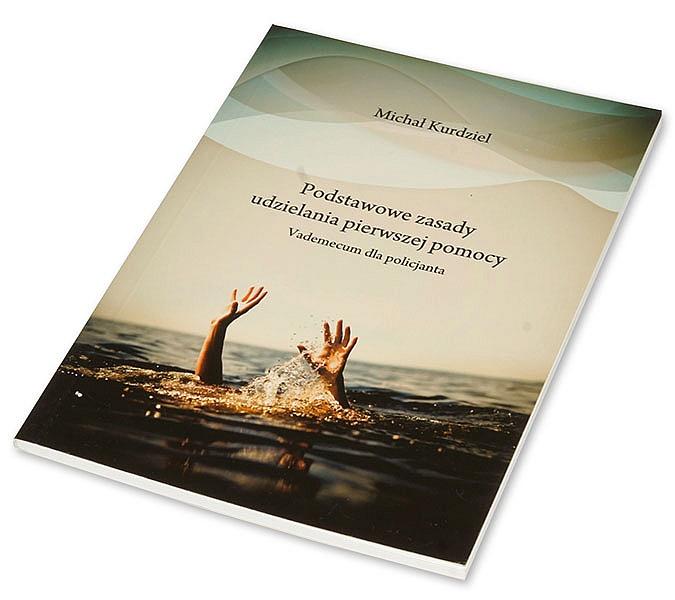
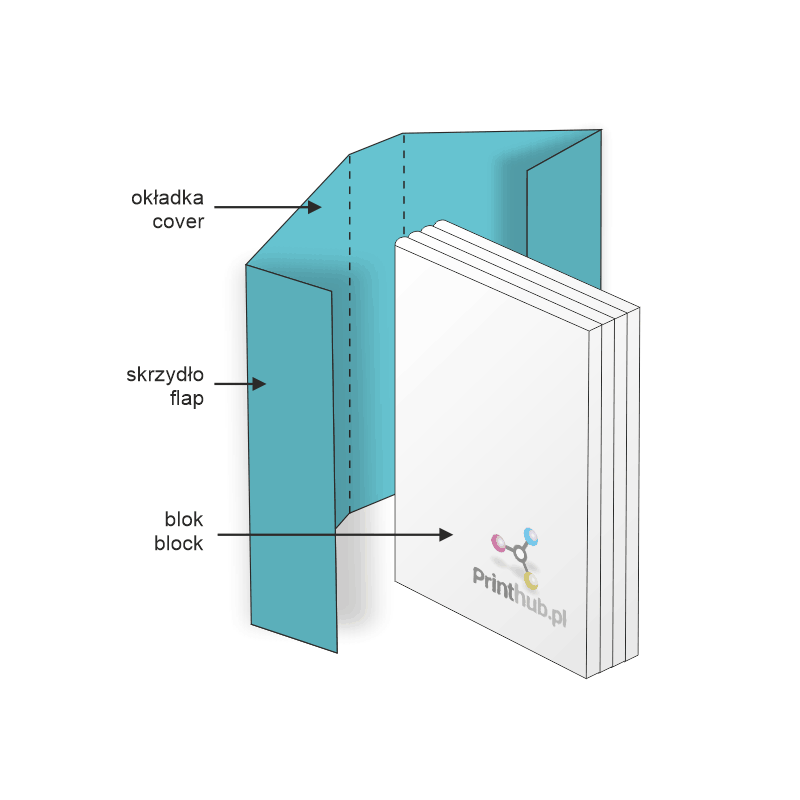 Construction of a paperback book
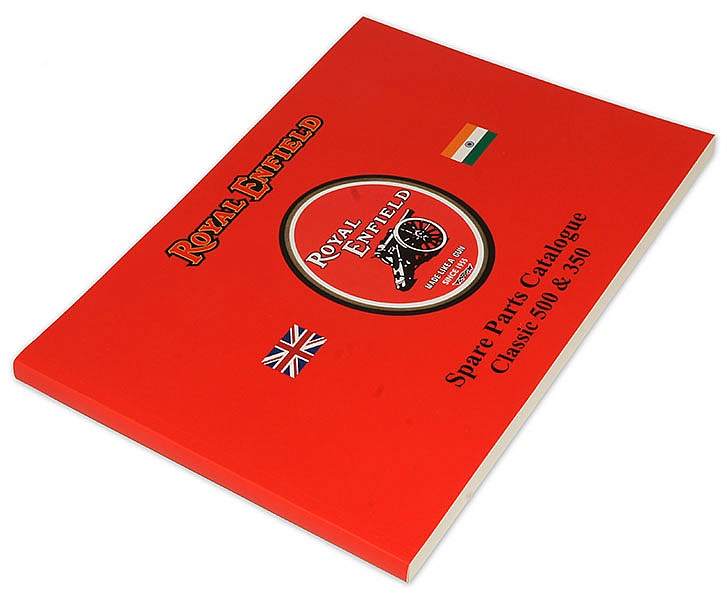
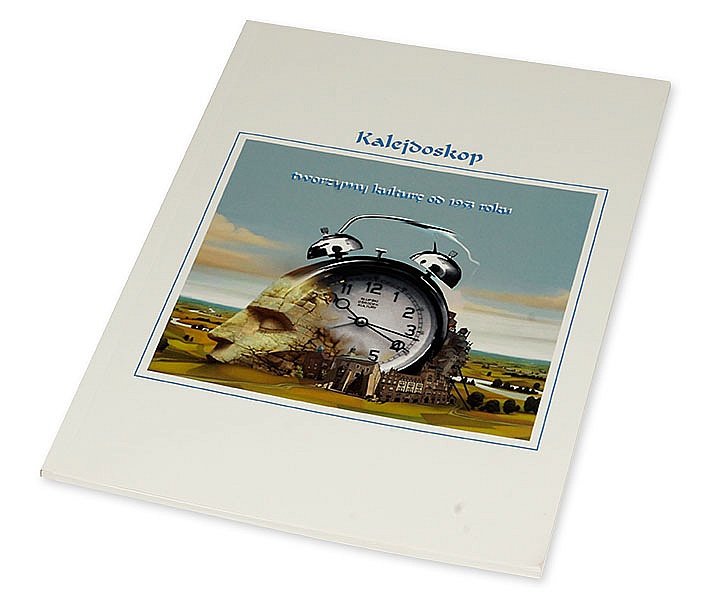
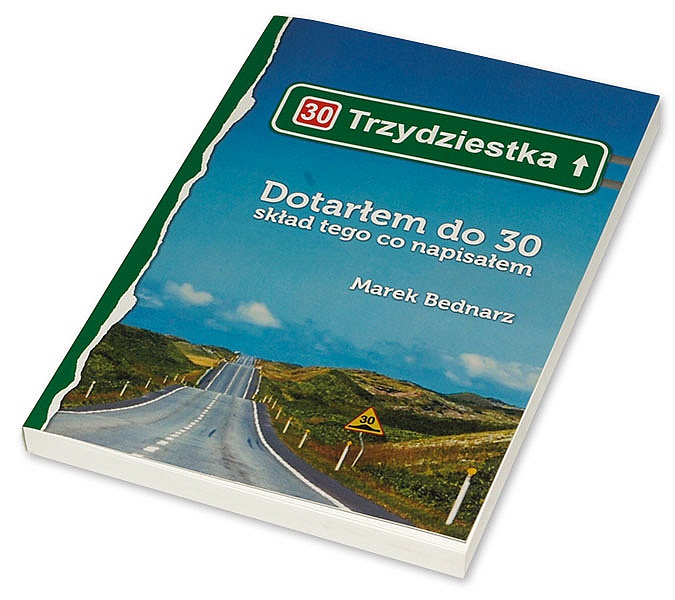
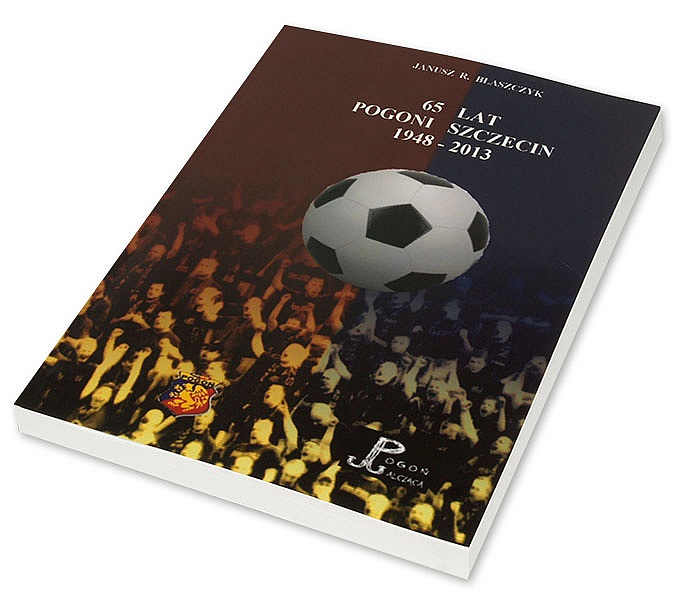
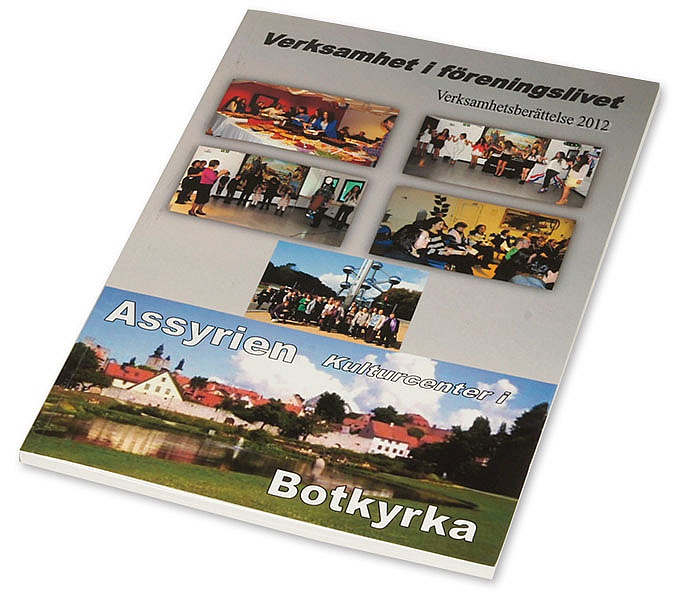
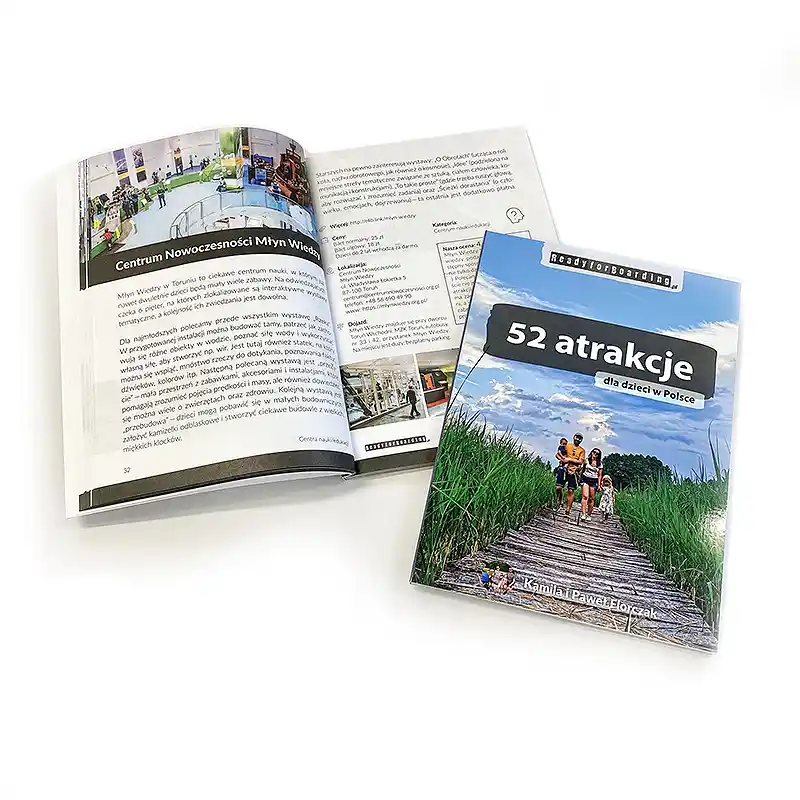 Book in softcover glued binding. The interior is printed in color on uncoated Speed-E 90g paper.
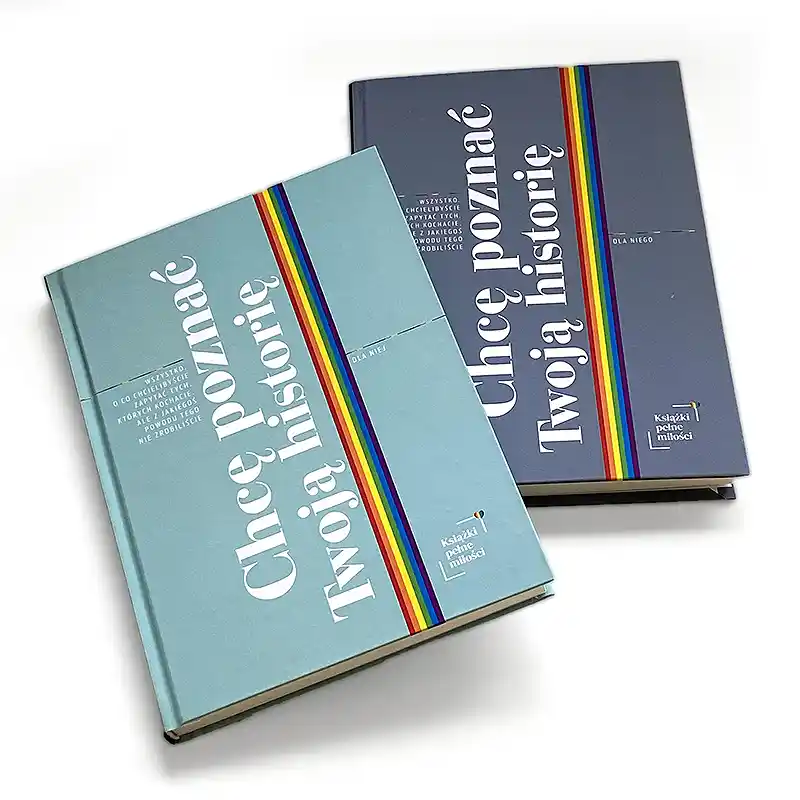 Sewn-glued books in hardcover. Soft-touch laminated cover
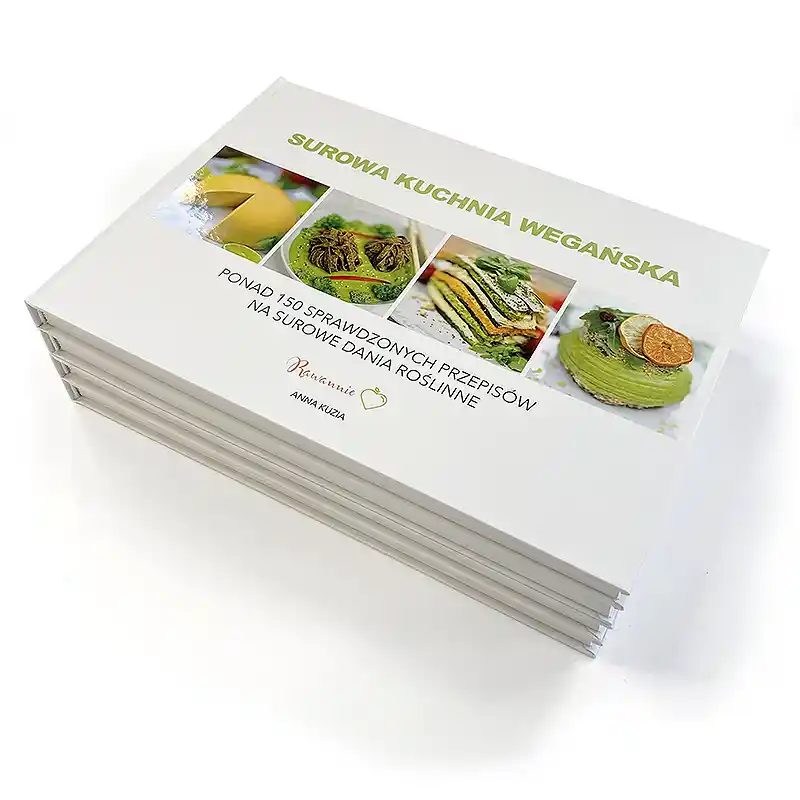 Book in hardcover with sewn and glued binding. Laminated cover, selectively varnished photos.
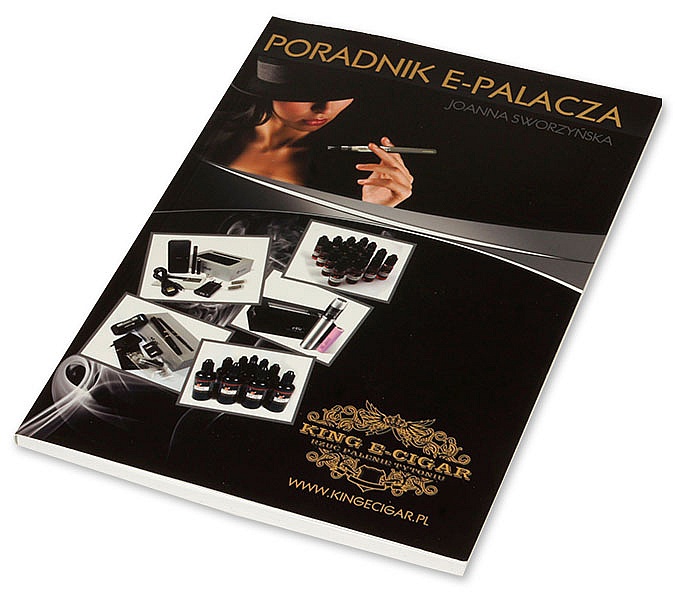
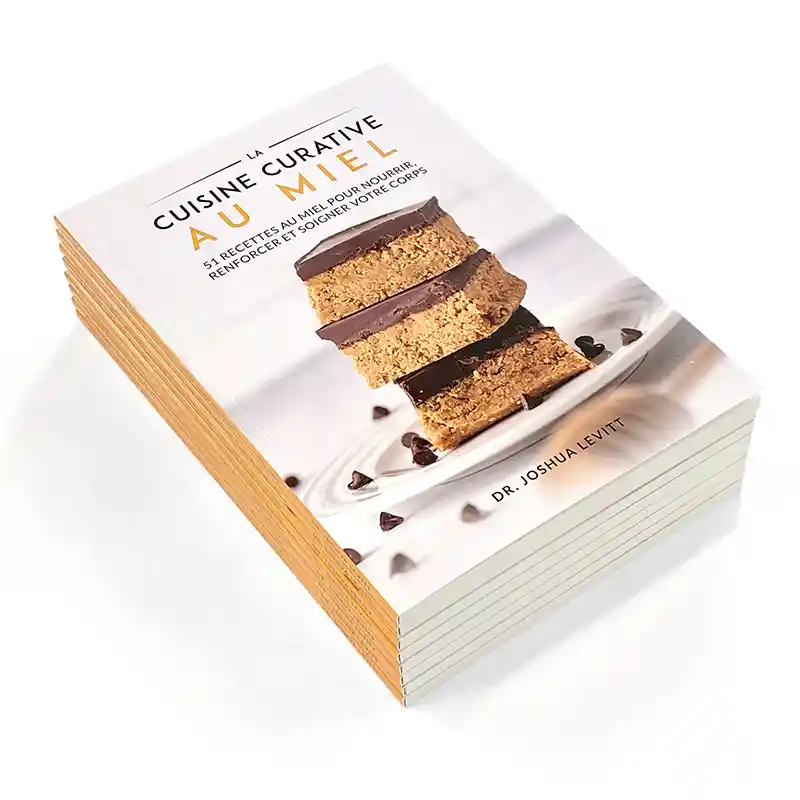 Cookbook in soft glued binding, cover printed on 350g paper with glossy laminate
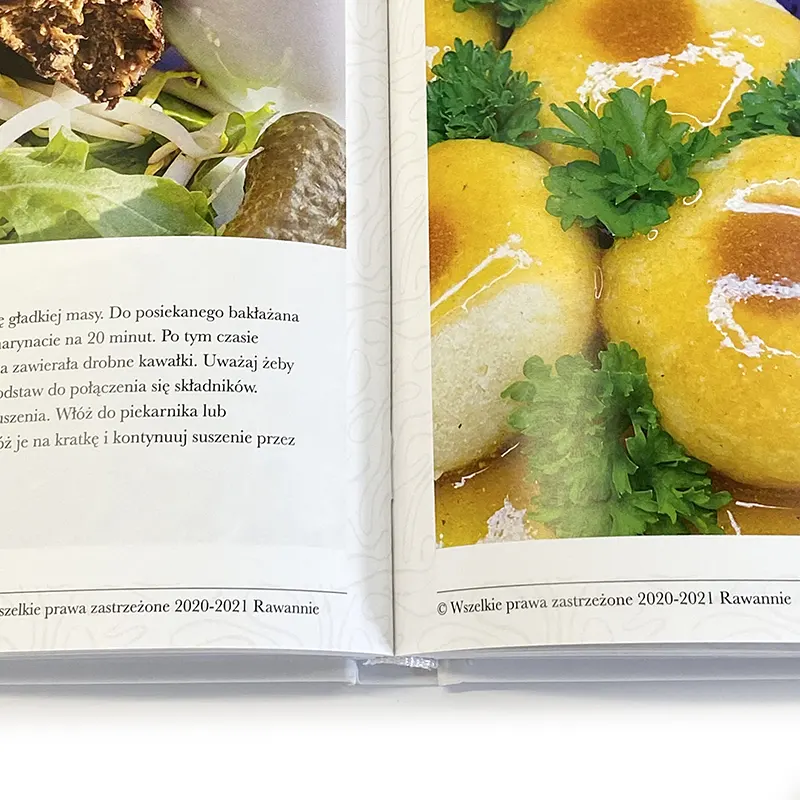 Cookbook printed on coated, matte wood-free paper 90g
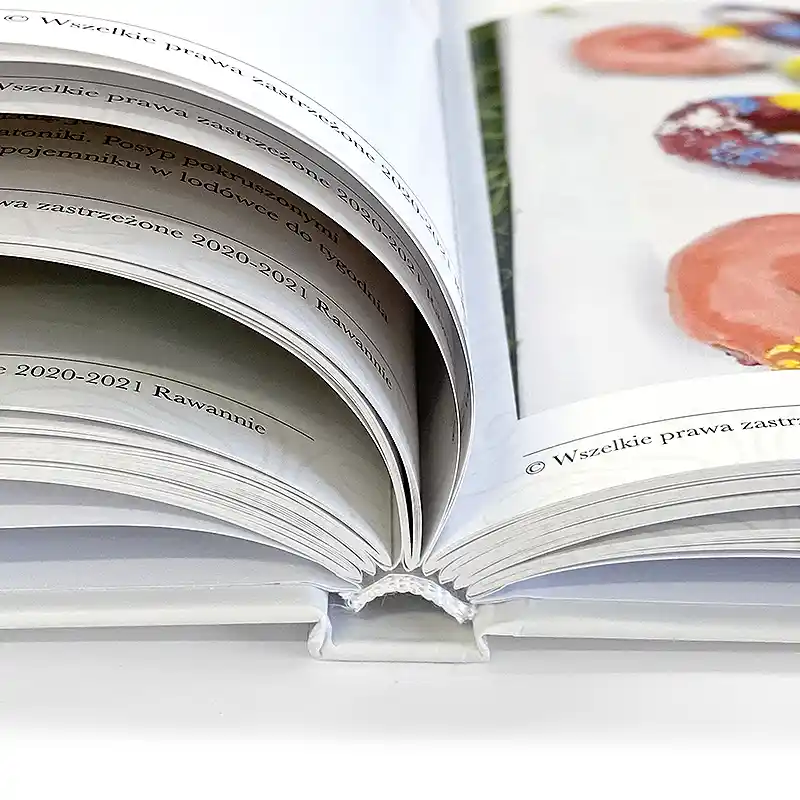 Cookbook in hardcover with sewn-glued binding. Matte coated paper 135g. White headband
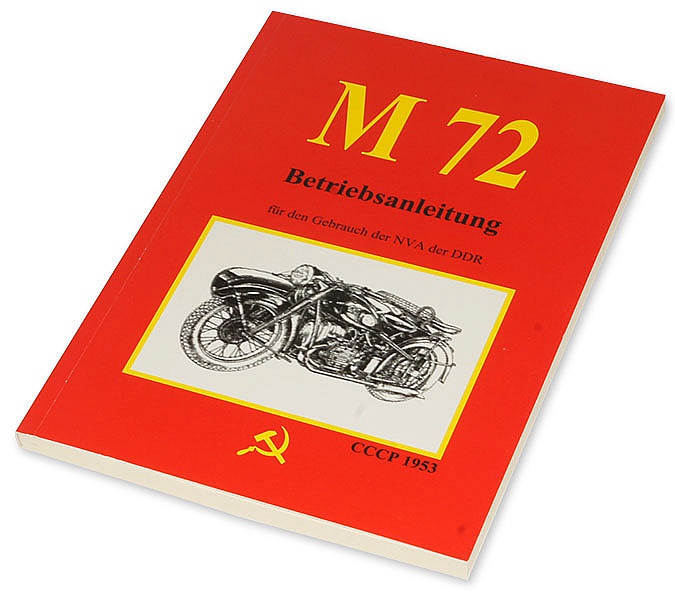
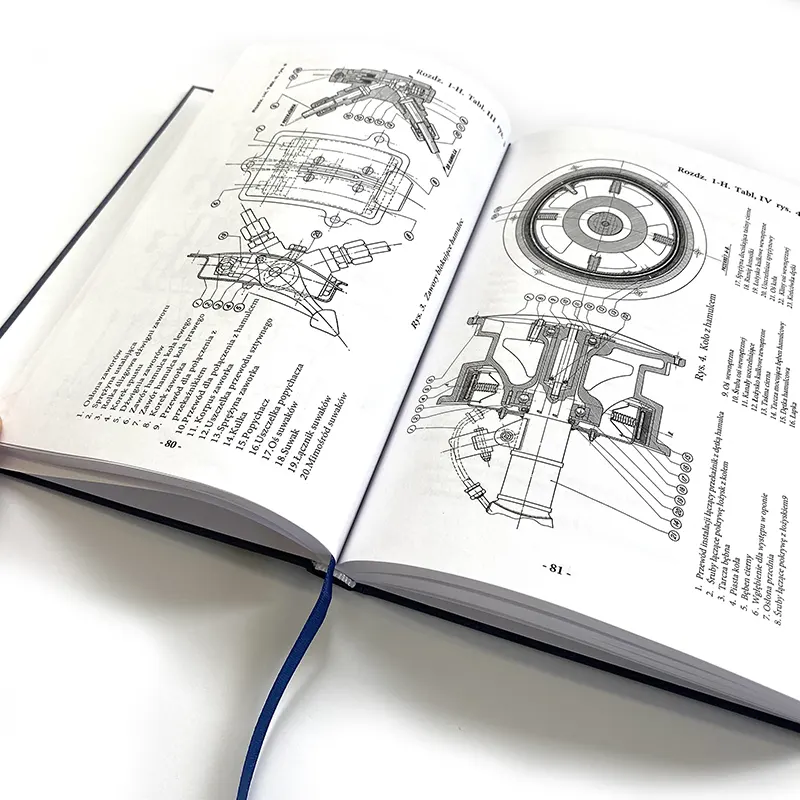 Hardcover book - operating manual for oldtimer aircraft.
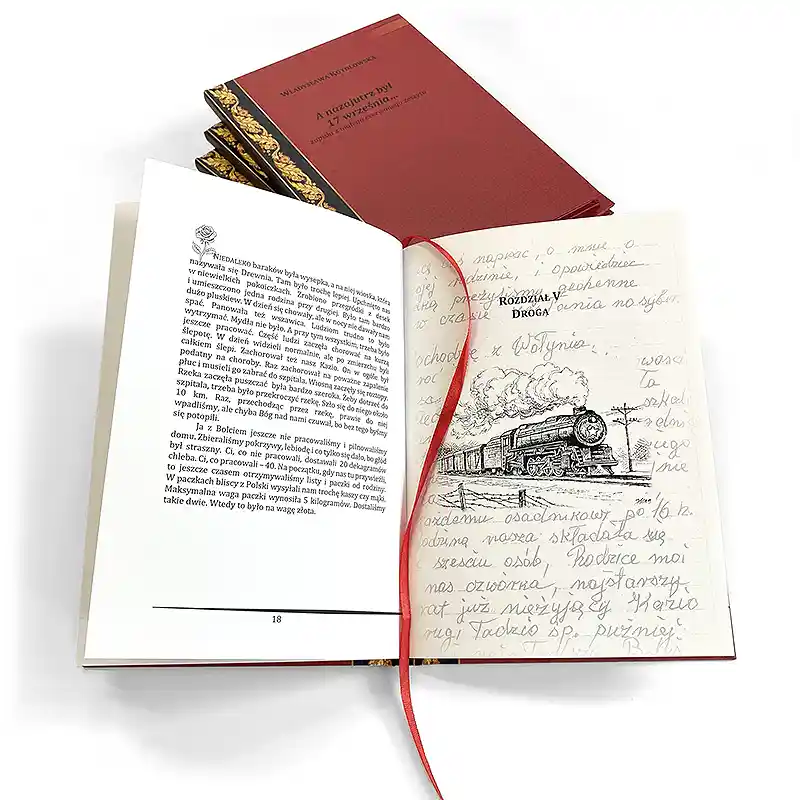 Hardcover book, red ribbon bookmark.
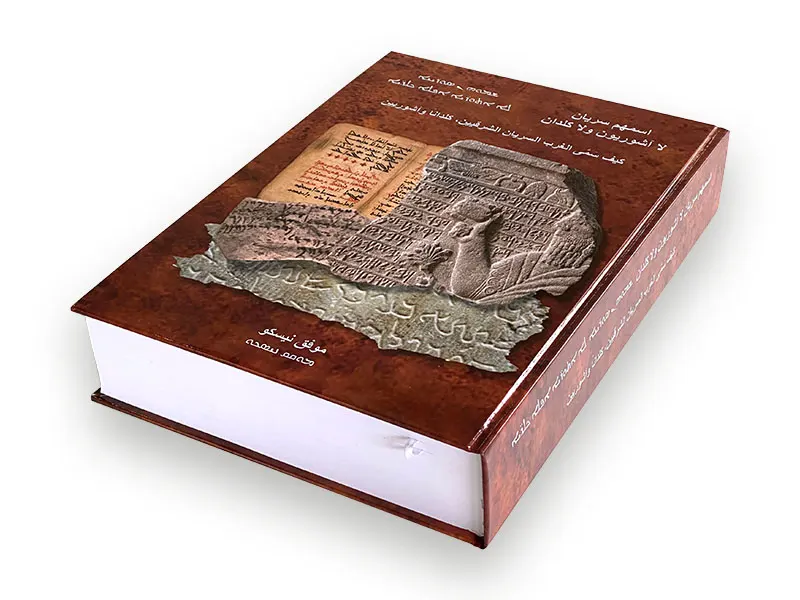 An Arabic book with a volume of approximately 1000 pages in a hardcover glued binding with a headband and a ribbon bookmark. The specific execution of Arabic books is characterized by the spine on the right side and the reverse reading direction.
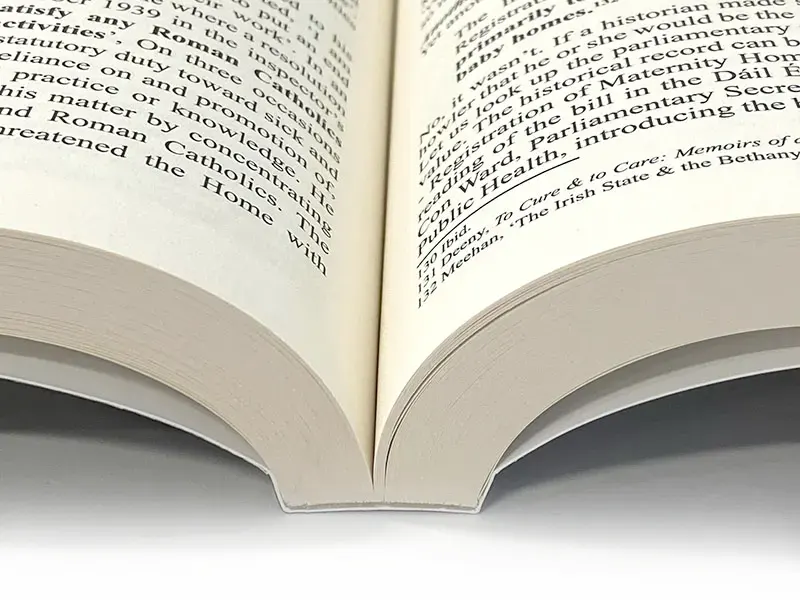 The interior of the book is printed in black on Ecco Book Cream paper. The cream-colored paper refers to old books, giving them a specific character. The soft glued binding significantly improves the ease of opening due to the considerable volume of the book.
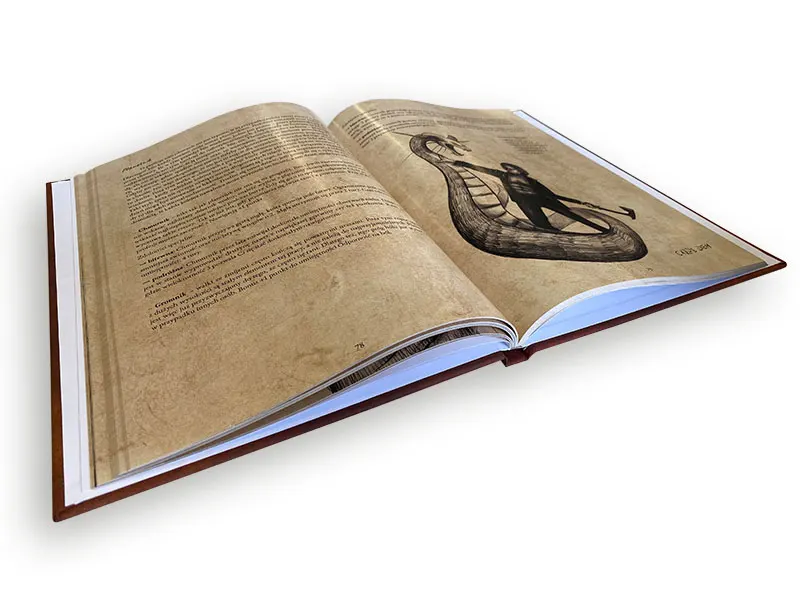 Hardcover-glued book printed in color on 135 g coated paper.
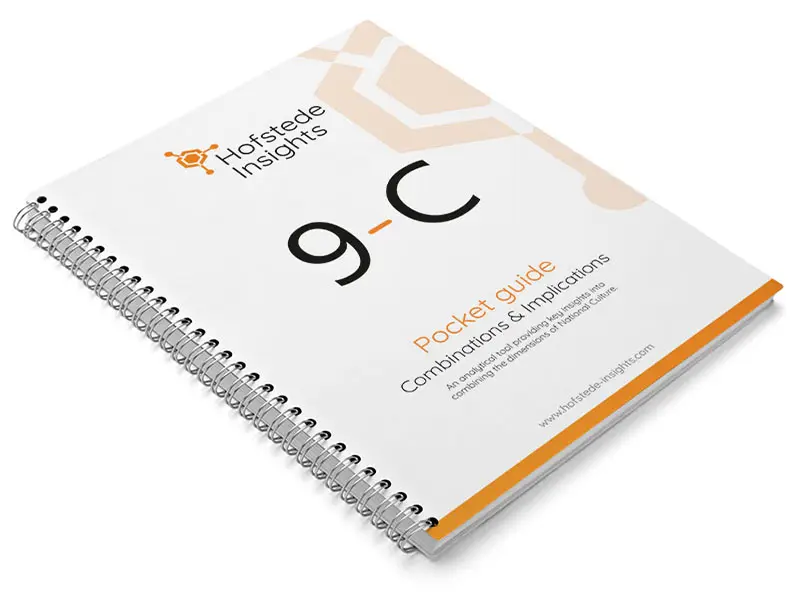 Spiral-bound books are convenient and durable for intensive use. A suitable binding choice for: user manuals, product catalogs, service books. The way the pages are connected allows the book to lay completely flat.
Print-on-demand books
Order your own books in ✓softcover ✓hardcover
printed ✓offset ✓digitally from 1 copy.
How much does it cost to print your own book?
Book production is a complex, multi-stage process. To obtain a cost estimate, a number of basic parameters need to be specified. The most important ones are: print run, binding, format, number of pages, paper, printing method, and finishing.
Each of these parameters affects the price of a book. The basic principle is that increasing the print run reduces the unit price per book. Nothing reduces the price of a single book as significantly as increasing the print run. Another important parameter is the format, whose surface area is roughly proportional to the production cost of a book. This is mainly related to increased raw material consumption and a larger print area. An important aspect is the binding method. The choice of binding is very significant, as it affects the appearance, durability, and usability of the book. For example: a perfect-bound book will be harder to open than a sewn-bound book, which lays flatter (pages fan out better to the sides), but is more expensive to produce. It is worth considering whether the book should be comfortable to use or simply inexpensive. When choosing paper, apart from aesthetic considerations such as colour or paper type, it is important whether the paper should be standard or bulking. If the book has a small number of pages, choosing standard paper may make the book look like a thin exercise book and thus be unimpressive. In this case, it is worth considering bulking paper, which will considerably increase its volume and make the spine significantly wider. Bulking paper is characterised by greater thickness at the same weight, so a thicker book will not be heavier. After considering and specifying all these parameters, the book can be priced using our book calculator available after selecting a format at the top of this page.
What paper should be used for book printing?
Paper is an important consideration when printing a book. Above all, the weight and thickness of the book should be taken into account. If the book has few pages, using bulking paper of considerable thickness can produce a favourable visual effect. For books with a large number of pages, their significant weight and volume must be considered. In such cases, it is advisable to use papers with low volume and weight. The spine size in different binding types has its limit, so its thickness matters. The paper inside should not be too stiff, as this will hinder the use of the book and also negatively affect its durability. The pages should be soft to allow the book to open freely. It should be noted that a perfect-bound, sewn, or sewn-and-glued book does not have hinges in the spine, so the ability to open it depends on the softness of the spine and the paper used to print the interior pages.
Comparison of papers used in book printing
| Paper name | Grammage (g/m²) |
Opacity (%) |
Brightness (CIE) |
Thickness (µm) |
| Uncoated Amber Graphic | 80 | 92 | 143 | 99 |
| Uncoated Amber Graphic | 90 | 94 | 143 | 110 |
| Uncoated Amber Preprint | 100 | 96 | 167 | 130 |
| Gloss coated Novatech | 115 | 94.5 | 125 | 85 |
| Gloss coated Novatech | 135 | 95 | 125 | 100 |
| Matt coated Novatech | 115 | 95 | 100 | 97 |
| Matt coated Novatech | 135 | 96.5 | 100 | 117 |
| Coated, woodfree One Bulk 1.14 | 65 | 95 | 87 | 74 |
| Coated, woodfree Sol Plus 1.2 | 80 | 96 | 94 | 96 |
| Coated, woodfree Sol Plus 1.2 | 90 | 97 | 94 | 108 |
| Uncoated Ecco Book 1.4 | 60 | 94 | 80 | 84 |
| Uncoated Ecco Book 1.6 | 70 | 97 | 80 | 112 |
| Uncoated Ecco Book Cream 2.0 | 60 | 92 | 73.5 | 120 |
| Uncoated Ecco Book Cream 2.0 | 70 | 93 | 73.5 | 140 |
| Uncoated Ecco Book Cream 2.0 | 80 | 94 | 73.5 | 160 |
| Uncoated Ecco Book Cream 2.0 | 90 | 94 | 73.5 | 180 |
Description of popular materials:
Amber Graphic
Uncoated paper, commonly referred to as offset paper, very similar to the paper commonly used in office printers. It is rough to the touch and absorbent. It is easy to write on, even with a fountain pen. It is suitable for both black-and-white and colour printing, but in offset technology it does not provide colours as vivid as coated papers. With perfect binding, it allows for a very strong bond, guaranteeing the highest durability of the printed book.
Amber Preprint (uncoated)
Premium uncoated paper with similar characteristics to Amber Graphic. Enhanced brightness and additional surface smoothing guarantee better colour intensity in offset and digital printing technology than Amber Graphic, but it is inferior to coated papers. Commonly used for the production of letterheads and books in the premium sector. With perfect binding, it allows for a very strong bond, guaranteeing the highest durability of the printed book.
Ecco Book (uncoated)
Uncoated, woodfree bulking paper. Available in cream and white versions. Thanks to the technological bulking process, it is characterised by considerable thickness relative to its grammage and high opacity. Its parameters allow for a lightweight book without reducing its volume. This paper, particularly in the cream version, is not suitable for colour book printing. Its cream variant allows for printing books that resemble in appearance those known from decades ago.
Sol Plus (coated, woodfree)
Woodfree, coated, bulking paper with a natural white colour. It is characterised by very good opacity and volume parameters relative to its low grammage. Thanks to its high parameters, it can be used as a substitute for wood-free coated papers of much higher grammages. Sol Plus paper guarantees excellent quality double-sided colour printing. Its low grammage significantly reduces book printing costs.
G-silk, Vantage, Magno (coated, wood-free)
High brightness and smoothness, no bulking or slight bulking (G-silk). The most popular material for printing flyers, brochures, catalogues, and other advertising materials. It provides excellent print quality and vivid colours in every popular printing technology.
Types of book binding
Softcover binding
Softcover books have a cover made of paper/card with grammages of 250–350 g (stiffness similar to a business card).
Characteristics of softcover binding: the cover pages in softcover perfect binding are flush with the interior pages. The finished book has flat edges and a rectangular spine.
Preparing artwork for softcover binding: if the background is printed to the edge, a 2 mm bleed* is required, the same as for the interior. The cover can be printed on the inside in the same way as the outside.
Hardcover binding
Hardcover books have a cover made of solid board approximately 2 mm thick (high rigidity, does not allow free bending).
Characteristics of hardcover binding: the cover pages have a larger format than the interior pages. The finished book has protruding (2–3 mm) cover edges relative to the interior pages. The spine can be flat or rounded.
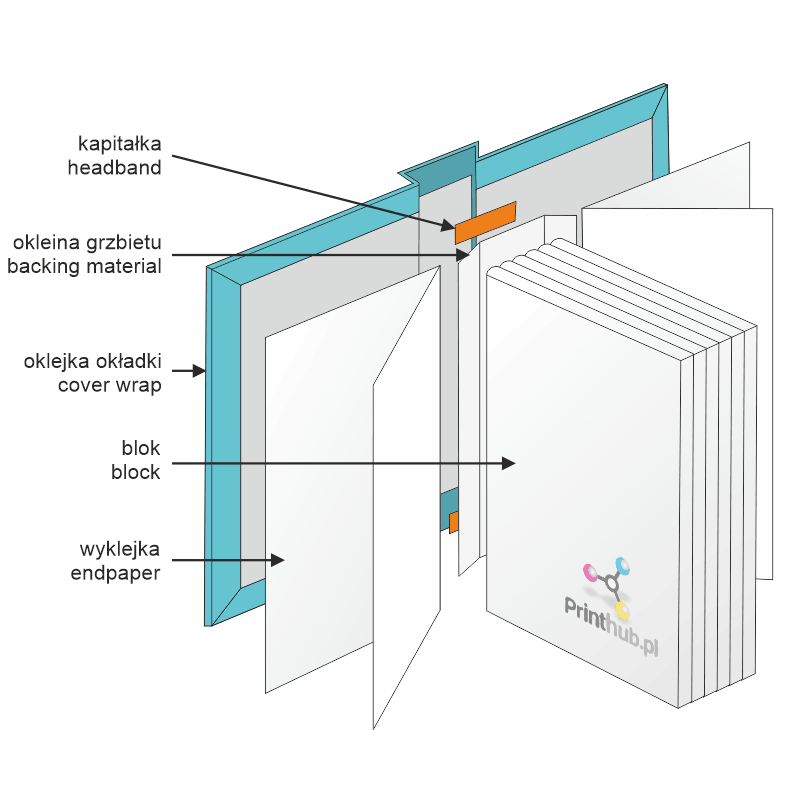
Preparing artwork for hardcover binding: if the background is printed to the edge, a 20 mm bleed* is required, unlike the interior (2 mm). This is because printing is done on a cover wrap, which is then used to wrap the board to create the hardcover. The hardcover cannot be printed on the inside. To obtain a print on the inside of the hardcover, an endpaper is printed (see the hardcover book structure diagram), which is twice the size of an interior page and is folded in the middle. One half of the endpaper is glued to the inside of the cover, and the other forms a flyleaf that connects the cover to the book block.
*) Bleed is a printed area of the page that is trimmed off during the finishing of the book to its final format.
Method of joining pages inside the book block
Saddle-stitched binding
Pages are joined at two points using wire/staples. This binding is suitable for books with a volume of 8 to several dozen pages (depending on the thickness of the paper used). The number of pages in the book block must be divisible by 4. The spine in this binding has a rounded shape. Books produced with this binding are characterised by easy openability. Saddle-stitched binding is the cheapest of the bindings available in our print shop.
Perfect binding
The most popular method of binding printed books. Pages arranged parallel to each other are glued along the edge. The book spine is rectangular, and its width ranges from 3 to 50 mm. Perfect binding, depending on the thickness of the paper used, is applied to books with a page count of more than 40. Books that do not achieve a spine width of 3 mm require saddle-stitched binding for technological reasons. Books produced with perfect binding, due to the parallel gluing of pages, have poorer openability than sewn books. The volume of the book (spine thickness) also plays an important role in how easily it opens. Perfect-bound books with a large number of pages (several hundred), where the spine width reaches several centimetres, are characterised by significantly better openability. In this regard, the general rule is: the thicker the spine, the better the book behaves.
In perfect binding, two gluing technologies are used depending on the requirements: hot-melt and PUR.
Hot-melt (hot glue) is the most popular method commonly found in books for decades. There are many varieties of glue in this technology, which is continually being improved. The latest thermoplastic adhesives based on polymers achieve elasticity and durability parameters close to polyurethane adhesive (PUR), which significantly expands their application.
Modern hot-melt adhesives are characterised by high durability of the adhesive joint, a favourable price, and production efficiency. They are most suitable for books printed on uncoated paper. An important advantage is the speed of setting, which occurs as soon as the adhesive cools (approximately 3 minutes), allowing further bookbinding processing and fast delivery of the finished product to the customer.
PUR (polyurethane adhesive) – cured during a multi-hour chemical reaction, it has high elasticity and adhesion to all printing substrates after 48 hours. It provides measurable benefits when binding books and catalogues in which coated (art) paper has been used for the interior. The long drying time and stringent requirements slow down and complicate production.
Sewn-and-glued binding (section sewn)
This is a hybrid binding type in which pages are sewn into signatures of 16–32 pages, and then glued together as a whole to form a book with a volume of up to one thousand pages. Sewn-and-glued binding combines the best features of both the above-mentioned binding types – sewn and perfect bound. Easy openability – as in sewn binding + a large number of pages and a spine width of up to 50 mm – as in perfect binding.
Spiral binding
A binding commonly used in various types of documentation, menus, and catalogues that will be intensively used. Thanks to the perforation of pages and the use of a metal spiral, pages of any stiffness can be freely turned many times over without the risk of them falling out, as can occur with other bindings under intensive daily use. The absence of a spine allows the book to be folded in any direction. This is a very convenient and very durable binding. The option to choose spirals in different colours can serve as an additional decorative element for the book. The durability of a spiral-bound book can be further increased by applying rounded corners, which will prevent their deformation and delamination during intensive use.
Comparison of available bindings:
| Binding type | Saddle-stitched | Perfect bound | Sewn-and-glued | Spiral |
| Production cost | ••• | •• | • | • |
| Openability | •• | • | •• | ••• |
| Paper grammage | 60 – 350 g | 60 – 130 g | 60 – 130 g | 90 – 350 |
| Page count * | 8 – 60 | 40 < | 40 < | 8 < |
| Binding durability | • | •• | •• | ••• |
| Lead time | ••• | •• | • | • |
• the more, the better
*) depending on paper thickness
Where to print your own book?
You can order your book printing from the online print shop Printhub. Print your book from a PDF file in softcover, hardcover, sewn-and-glued, or spiral binding from just 1 copy. We produce books using digital and offset technology in black, CMYK colour, and Pantone on uncoated, coated, tinted, and bulking papers with delivery throughout Europe. Price your book using a convenient online calculator that includes descriptions and illustrations to help you make key decisions — simply choose the format, paper, binding, and print run, and you're done!
How long does it take to print a book?
Printing a softcover book takes an average of up to 7 days. A hardcover book takes up to 2 weeks. Printhub print shop also offers express printing, outside the standard production queue.
How to print books from PDF?
Depending on the type of binding used, you need to prepare either 1 PDF file containing all pages or two separate files (interior + cover).
- Saddle-stitched binding (like a booklet) and spiral – 1 file containing all book pages in sequence, including the cover.
- Perfect binding and sewn-and-glued binding (softcover or hardcover) – 2 separate files. The interior file – containing all interior pages, and a second cover file with the spine in the centre (imposed). If you are unable to impose the cover, supply us with the cover pages together with the interior as for saddle-stitched binding, and select the cover imposition service in the book configurator. In this case, the covers will be joined at the spine (see: cover background colour).
The book configurator provides vector templates for the cover and interior, which are generated dynamically based on the book parameters set.
Personalised books
If you need your books to be unique, e.g. each one containing a dedication with specific text, marked with a unique QR or barcode, with variable numbering, contact our print shop. Thanks to specialist technologies, we will mark each copy on the cover or inside according to your concept.
Book accessories
In our print shop's offer, you will also find bookmarks for books.